Femicore Ingredients Examined: Scientific Evidence & Mechanisms
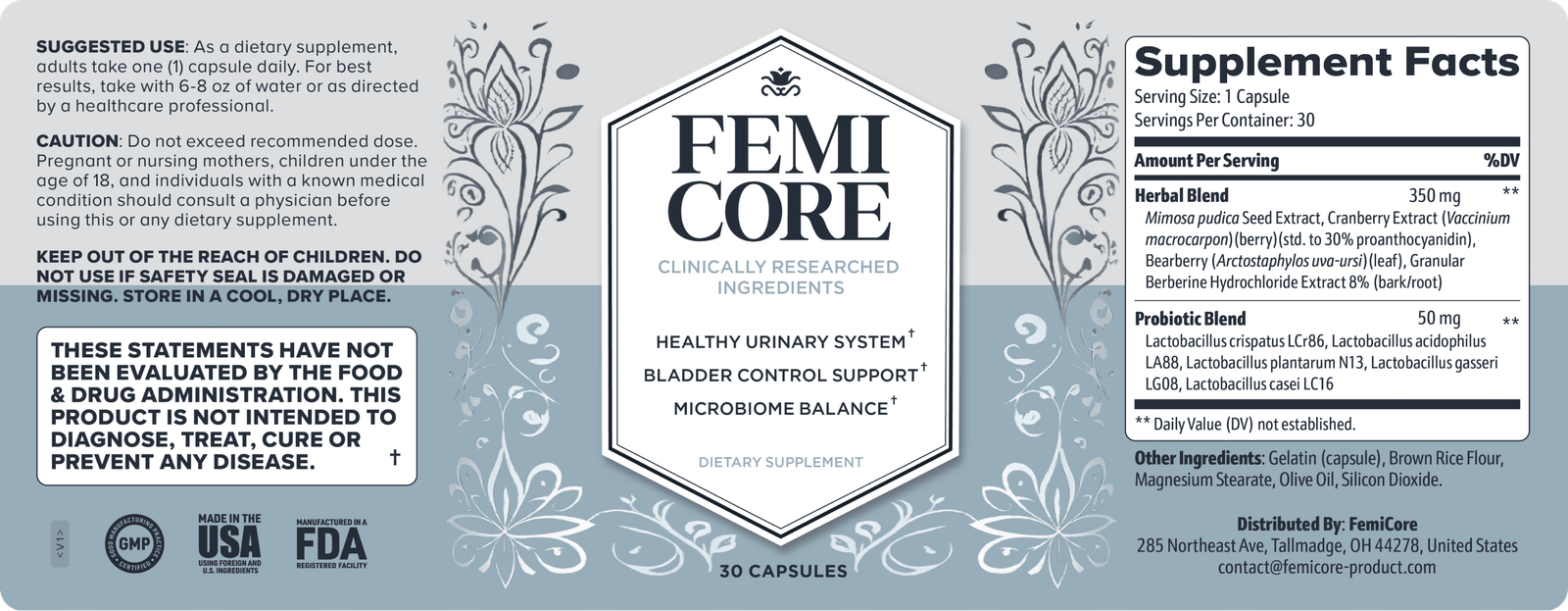
To determine if Femicore is genuinely effective for urinary and bladder health, we must look past the marketing and examine the clinical evidence supporting its individual ingredients.
Evidence Limitation Disclaimer
It is crucial to understand the concept of evidence distance. While the individual ingredients inside Femicore have been studied independently in academic and clinical settings, the finished Femicore product itself has not undergone independent randomized controlled trials. We are evaluating the scientific rationale of the formula, which does not guarantee individual results.
The Botanical Matrix
Femicore utilizes a blend of traditional herbs and plant extracts historically used for urinary tract support.
Cranberry Extract
Cranberry is perhaps the most well-known natural compound for urinary health. Independent clinical research indicates that cranberries contain A-type proanthocyanidins (PACs). These PACs can interfere with the ability of pathogenic bacteria (such as E. coli) to adhere to the epithelial cells lining the urinary tract.
- Scientific Consensus: Highly effective as a preventative measure for supporting urinary tract health, though it is not a treatment for an active infection.
Uva Ursi (Bearberry Leaf)
Uva Ursi has a long history of use in traditional herbalism for urinary issues. Its active compound, arbutin, is converted in the body into hydroquinone, which is excreted through the kidneys and acts as a mild urinary tract astringent and antiseptic.
- Scientific Consensus: Short-term use is widely recognized in herbal monographs (like the EMA) for minor urinary tract complaints.
Mimosa Pudica Seed
Often used in gut health protocols, Mimosa Pudica seeds are highly mucilaginous. In the digestive tract, they form a gel-like substance that can help physically capture and remove undesirable elements. Its inclusion in Femicore suggests a holistic approach to the gut-bladder axis.
- Scientific Consensus: Strong evidence for gut microbiome support, with theoretical downstream benefits for systemic and pelvic microbiomes.
Berberine HCl
Berberine is a powerful botanical alkaloid extracted from plants like goldenseal and barberry. It has broad-spectrum antimicrobial properties and has been studied for its ability to balance flora across various bodily microbiomes.
- Scientific Consensus: Very strong evidence for metabolic and microbial balance.
The Probiotic Strains (Lactobacillus)
The urinary and vaginal tracts rely heavily on Lactobacillus bacteria to maintain a healthy, slightly acidic pH, which deters the growth of harmful pathogens.
| Strain | Clinical Role in Women's Health |
|---|---|
| L. crispatus | The dominant species in a healthy vaginal and urinary microbiome; heavily associated with protection against dysbiosis. |
| L. acidophilus | Produces lactic acid to maintain optimal pH levels, creating an inhospitable environment for pathogens. |
| L. plantarum | Known for its strong adhesion properties to epithelial walls and immunomodulatory effects. |
| L. gasseri & casei | Supports overall flora balance and has been studied for various metabolic and localized immune benefits. |
Conclusion on the Formula
From a formulation standpoint, Femicore combines two logical approaches: preventing bacterial adhesion via botanicals (Cranberry/Uva Ursi) and repopulating beneficial flora (Lactobacillus strains). While we advise ignoring the exaggerated "7-second ritual" marketing, the actual ingredient label reflects a scientifically sound approach to daily urinary wellness.